The shopping cart discount will be replaced by loyalty discount starting August 15th. until that, registered customers will receive a 15% discount on all regular priced products.

Unit price: €4.00 / 100 ml
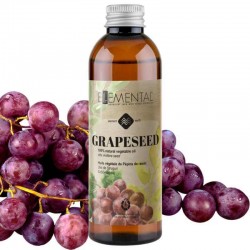
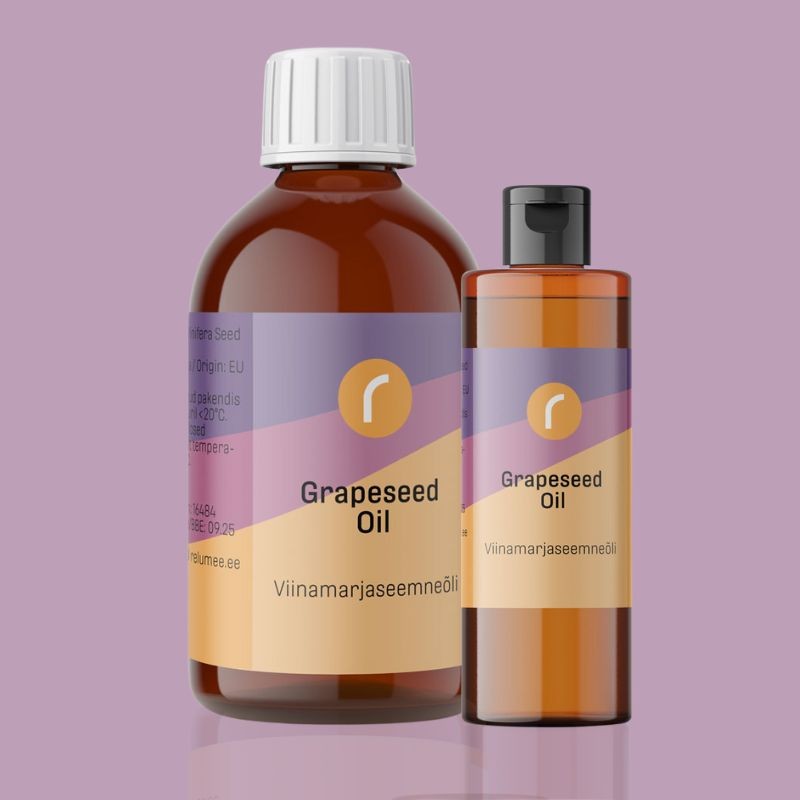
Grapeseed oil is made from grape seeds and is yellowish-green and liquid, absorbing quickly on the skin without leaving it oily. The oil is made from leftovers from wine production.
Grapeseed oil contains antioxidants such as proanthocyanidins and resveratrol that help fight free radicals and prevent skin aging. The oil can help reduce fine lines, wrinkles, and other signs of aging.
Linoleic acid, abundant in grapeseed oil, has anti-inflammatory properties and can help reduce redness and breakouts. In addition, linoleic acid has skin-softening and barrier-forming properties.
Grapeseed oil comes from the seeds of wine grapes (Vitis vinifera) and is a byproduct of the winemaking process. It is a light, pale yellow, odourless oil that absorbs quickly and leaves no greasy residue on the skin. Its exceptionally high linoleic acid content (60%) makes it one of the most useful oils for oily, acne-prone, and combination skin, and its concentration of antioxidant polyphenols – including proanthocyanidins and resveratrol – gives it notable anti-ageing properties.
Grapeseed oil is dominated by linoleic acid (60%) and oleic acid (27%), with palmitic acid (7%), stearic acid (3%), and trace amounts of arachidic, linolenic, and palmitoleic acids.
Linoleic acid (60%) is an Omega-6 fatty acid and the defining component of grapeseed oil. It reinforces the skin's lipid barrier, reduces water loss, and calms inflamed or reactive skin. Acne-prone skin is often deficient in linoleic acid – when linoleic levels are low, the skin produces thicker sebum that blocks pores more easily. Topical application of linoleic-rich oils helps restore this balance. In soap linoleic acid adds conditioning properties but reduces hardness.
Oleic acid (27%) softens skin, supports cell renewal, and helps maintain moisture. It also gives grapeseed oil slightly better penetration than purely linoleic-dominant oils.
Palmitic acid (7%) forms a protective film on the skin and in soap contributes hardness and a creamy lather.
Stearic acid (3%) helps retain moisture in the skin and supports elasticity.
Proanthocyanidins and resveratrol – grapeseed oil contains polyphenol antioxidants that help neutralise free radicals, reduce sun damage, even out pigmentation, and smooth fine lines. These compounds are part of what makes grapeseed oil useful in anti-ageing formulations beyond its fatty acid contribution alone.
Grapeseed oil suits oily, acne-prone, combination, normal, and ageing skin. Its light texture makes it one of the better options for oily skin types that still need barrier support. It absorbs quickly and does not leave skin feeling coated.
Facial oils and serums – grapeseed is a useful lightweight base for facial formulations targeting oily or acne-prone skin.
Anti-ageing face oils and serums – its antioxidant content makes it a useful supporting oil in anti-ageing blends. Pair with rosehip oil for a well-rounded anti-ageing facial oil.
Massage oils – grapeseed absorbs slightly faster than sweet almond oil, making it useful when a lighter after-feel is needed. Use at 70–100%.
Lip balms and lip glosses – grapeseed oil is one of the main components in well-formuated lip glosses due to its light feel and good slip. In Lithuania, the properties of the ingredients in lipsticks have been studied and one of the main components in the recipe is grapeseed oil. The recipe can be found here: 3 Ingredient Lipstick.
After-sun and soothing products – its anti-inflammatory properties make it useful in calming formulations for reactive or sun-exposed skin.
Grapeseed oil suits low porosity hair particularly well – its light texture allows it to penetrate fine or tightly-packed hair shafts more easily than heavier oils. It adds shine without weighing hair down.
In cold process soap, grapeseed oil contributes conditioning and skin-softening properties. Its high linoleic content adds slip and a creamy lather. Combine with harder oils such as coconut oil or palm to compensate for the softness linoleic acid brings to the bar. Recommended usage 5–15% of total fats. At higher percentages the bar becomes soft and takes longer to cure.
Saponification values: NaOH – 0.1265 / KOH – 0.177
Tech specs
INCI: Vitis Vinifera (Grape) Seed Oil
Manufacturing method: Pressed and refined
Appearance: Pale yellow liquid
Scent: Odourless
Comedogenicity: 1 / 4

Data sheet
You might also like
 Solid Hair Conditioner
 Grapeseed oil is made from grape seeds and is yellowish-green and liquid, absorbing quickly on the skin without leaving it oily. The oil is made from leftovers from wine production.
Grapeseed oil contains antioxidants such as proanthocyanidins and resveratrol that help fight free radicals and prevent skin aging. The oil can help reduce fine lines, wrinkles, and other signs of aging.
Linoleic acid, abundant in grapeseed oil, has anti-inflammatory properties and can help reduce redness and breakouts. In addition, linoleic acid has skin-softening and barrier-forming properties.