
Unit price: €11.00 / 100 ml
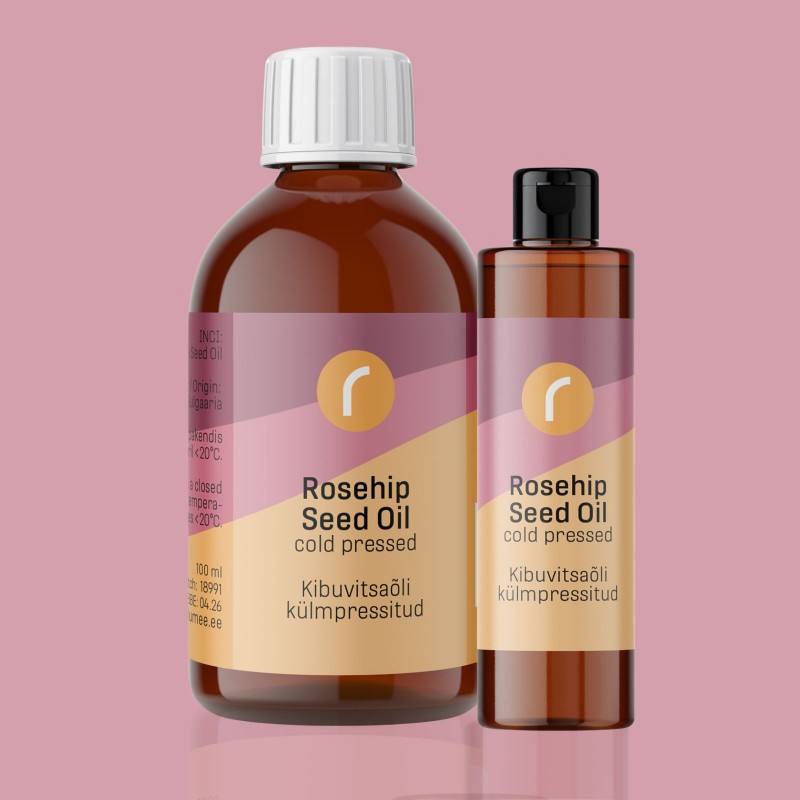
Cold-pressed rosehip oil is made from wild rose hips. Rose hip oil is a liquid oil with a light, grassy aroma and an orange-red color. It is suitable for use directly on the skin as well as in various serums and creams.
Due to its anti-inflammatory and skin regeneration composition, rosehip oil is suitable for a wide variety of skin types, including problematic and inflamed skin and aging skin.
Rosehip seed oil is cold-pressed from the fruit of wild-growing dog rose (Rosa canina) bushes. The orange-red, easily absorbed oil has a light texture and a subtle green aroma. It is one of the most studied plant oils in cosmetics. The combination of linoleic acid, alpha-linolenic acid, and the naturally occurring trans-retinoic acid (tretinoin) in the oil makes it one of the most active oils for facial skin care.
Rosehip seed oil has an exceptionally high polyunsaturated fatty acid content: linoleic acid (40%), linolenic acid (25%), oleic acid (22%), palmitic acid (7%), stearic acid (5%), and trace amounts of myristic, arachidic, and behenic acids.
Linoleic acid (40%) is an Omega-6 fatty acid that strengthens the skin's lipid barrier, reduces water loss, and calms reactive skin. Blemish-prone skin often shows lower linoleic acid levels, where sebum becomes thicker and pores block more easily – linoleic acid helps rebalance this. It also helps reduce the visible effects of UV exposure and uneven skin tone.
Linolenic acid (25%) is an Omega-3 (alpha-linolenic acid) that calms the look of redness and irritation and supports the skin's natural renewal. The high combined linoleic and linolenic content is a key reason rosehip oil performs well in formulations aimed at improving skin texture and tone.
Oleic acid (22%) softens skin, supports cell renewal, and helps the oil penetrate more effectively.
Palmitic acid (7%) forms a protective film on the skin and supports barrier function.
Stearic acid (5%) helps retain moisture and supports elasticity.
The bioactive compounds in rosehip seed oil work on several levels, supporting the skin's protective mechanisms and surface renewal. Linoleic and alpha-linolenic acid strengthen the epidermal barrier, reduce transepidermal water loss, and help ease the discomfort caused by dryness. Carotenoids – including beta-carotene, lycopene, lutein, and zeaxanthin – neutralise UV-induced free radicals, reducing oxidative stress and supporting a more even complexion. Provitamin A carotenoids act as retinoid precursors, which the skin can convert in small amounts into retinal and retinol – a gentler process than direct use of skin-irritating retinoids. The amount of trans-retinoic acid naturally present in rosehip seed oil is modest, but with sustained use it delivers a stable, gentle effect suited even to sensitive skin. Together, these active compounds help improve skin texture and hydration, and the look of fine lines caused by dryness (reference).
Rosehip seed oil suits blemish-prone, problem, sensitive, and mature skin. Its light texture and high polyunsaturated content mean it absorbs well without leaving skin greasy.
Facial oils and anti-ageing serums – use as a standalone facial oil or blended with other oils. For daily use on normal or combination skin, blend at 30–50% with a lighter base oil such as jojoba oil or olive squalane.
For improving uneven skin texture and evening out skin tone – apply to the area of concern once or twice daily.
Formulations for blemish-prone skin – use blended with lighter, non-comedogenic oils.
After-sun skin care – rosehip oil's calming and antioxidant properties make it a useful ingredient in soothing, restorative after-sun formulations.
Rosehip seed oil is not widely used in hair care, but it can be used to calm a dry or irritated scalp.
Using rosehip oil in soap making
We do not recommend using rosehip oil in soap. Its cosmetic properties do not survive the saponification process. Its high polyunsaturated content softens the soap and can shorten its shelf life. The orange colour fades during saponification.
Tech specs
INCI: Rosa Canina Seed Oil
Origin: Bulgaria
Manufacturing method: Cold-pressed
Appearance: Orange-red liquid
Scent: Mild characteristic scent
Comedogenicity: 1 / 4
Store in a sealed container in a cool, dark place away from direct sunlight. Available in 100 ml and 250 ml recyclable PET plastic bottles with double cap.

Data sheet
 How to make massage oil
 Cold-pressed rosehip oil is made from wild rose hips. Rose hip oil is a liquid oil with a light, grassy aroma and an orange-red color. It is suitable for use directly on the skin as well as in various serums and creams.
Due to its anti-inflammatory and skin regeneration composition, rosehip oil is suitable for a wide variety of skin types, including problematic and inflamed skin and aging skin.