- New
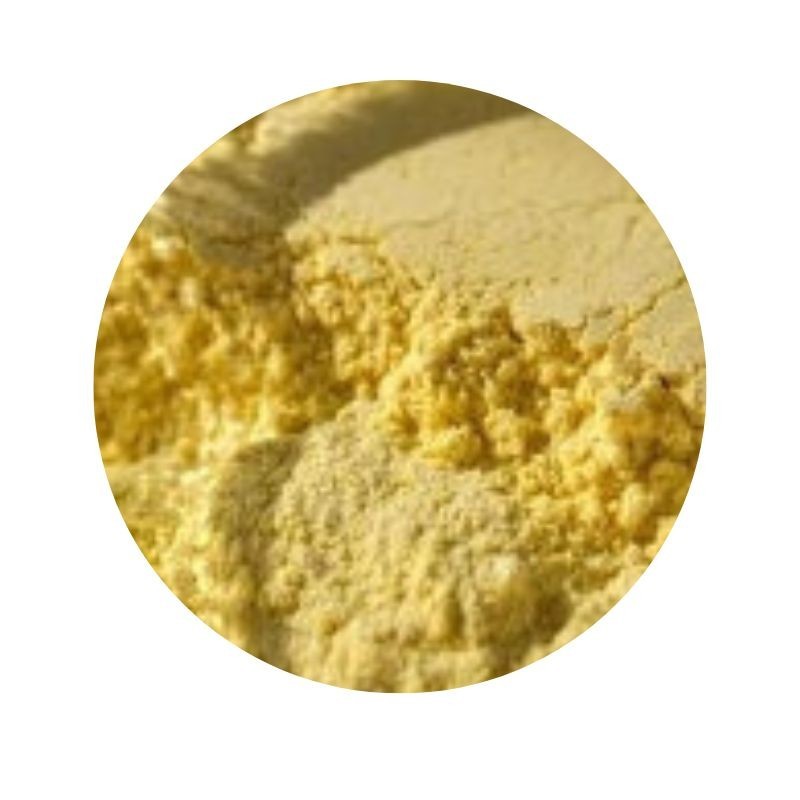

Yellow clay is a kaolin clay with a golden hue derived from natural minerals. It has the gentle effect of white clay, but adds a bright yellow hue to products. A fine yellow clay powder that is great for normal, combination or slightly oily skin.
Cleanses the skin without over-drying it.
Clay with low cation exchange capacity is gentle on the skin.
Suitable for normal, combination or oily skin.
Natural dye – gives products a yellow hue.
Mineral composition of yellow clay
Silicon dioxide (SiO₂, approximately 62%)
Aluminum oxide (Al₂O₃, approximately 23%) contributes to the clay's mild cation exchange capacity.
Iron oxide (Fe₂O₃, approximately 5.8%) is the source of the clay's golden yellow color.
Calcium oxide, magnesium oxide, sodium oxide, and potassium oxide are present in small amounts.
The use of yellow clay in cosmetics
Skin care Suitable for normal, combination or oily skin. Masks: mix 1 part clay with 1–1.5 parts liquid (spring water or hydrolate). Apply a thin layer to the skin, leave for about 10 minutes, then rinse and moisturize.
Hair care Suitable for all hair types as a gentle scalp treatment.
Scalp mask: apply to damp scalp, leave on for about 10 minutes, then rinse.
Shampoo additive: mix 1–2 tablespoons into neutral shampoo, leave for 5 minutes, then rinse.
Soap making
Cold process soap: To avoid lumps, mix clay powder in water or vegetable oil in a ratio of 1:3. Use up to 5 g per 450 g of soap fats. You can mix the clay with the fats before mixing with the soapstone solution or into the finished soap mixture before pouring into the mold.
In ready-made soap mass, use ¼–½ teaspoon per 500 g of soap mass.
Unrecommended areas of use: Yellow clay may not be effective for very oily or problematic skin; clay with a higher absorption capacity is better suited for this skin type.
Interaction with other substances. Clay is a natural mineral that is stable in acidic, neutral and alkaline mixtures. It is insoluble in water or oil, and in liquid products it settles to the bottom over time.
When making clay products, use glass, ceramic, or wooden utensils, avoid using metal utensils. It is recommended to use spring or filtered water as the liquid, not tap water.
Technical information INCI: Kaolin
Origin: France
Production method: mining, drying, mechanical grinding, screening – without chemical treatment, ionization or washing
Appearance: Fine yellow powder
Odor: characteristic
Particle size: 63 µm
Storage: Keep in the original container tightly closed, in a cool, dry and well-ventilated place, protected from moisture.

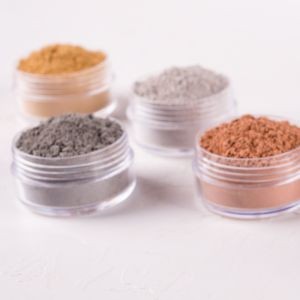 Natural clay powder - every color has its own story
 Yellow clay is a kaolin clay with a golden hue derived from natural minerals. It has the gentle effect of white clay, but adds a bright yellow hue to products. A fine yellow clay powder that is great for normal, combination or slightly oily skin.