
Blog categories
Search in blog
Telli uudiskiri

Soovid saada teavitusi uute toodete, retseptide ja sooduspakkumiste kohta? Liitu uudiskirja saajatega siin

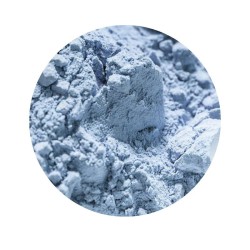
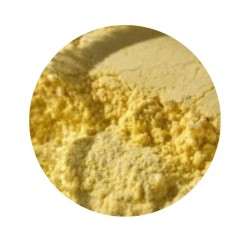
Green, white, red, orange, yellow, blue-gray – each hue reflects a specific geological story, and if you understand what causes it, you can use the color as your first clue about the clay's mineral composition and properties.
Clay begins as solid rock – granite, basalt, shale or volcanic ash. Rain soaks into the rock, wind wears it down, temperature changes cause cracks and crumbles. Over time, the rock breaks into ever finer particles. That’s how clay is born – rock transformed by water and time.
Rocks naturally contain a variety of mineral elements – silica, aluminium, iron, magnesium, calcium, potassium, sodium and trace elements such as zinc, copper and manganese. When water seeps through the rock, it dissolves these elements, carries them with it and redistributes them. This is how clay becomes a concentrate of natural minerals.
“Pure” clay is almost white or transparent, but during formation it accumulates mineral elements that give it color.
Iron is a key factor that behaves differently depending on whether or not there is access to oxygen during the clay's formation.
When clay comes into contact with air, iron gives it warm tones – reds, oranges and yellows. Such warm-toned clays usually form in oxygen-rich, often dry or warm conditions. Underwater or deep underground, where oxygen is scarce, iron remains in a different state and gives the clay cooler colours – greens, blue-greys and greys. This is characteristic of clays formed on the seabed or in humid environments.
Organic matter , which is abundant in areas rich in vegetation or sediment, acts as a filter and darkens the clay to brown, gray, or black. Manganese , which is present in small amounts, adds purple tones, while copper colors the clay green or blue-green.
When the clay's environment changes – for example, when green clay is exposed to air over time – it can gradually oxidize and take on warmer tones.
The color of clay also reflects the balance between the elements it contains (such as iron, manganese, etc.) and the natural conditions of its formation (climate, amount of water, oxygen levels).
In warm and humid climates, water moves actively, washing the rock heavily, and iron oxidizes easily, giving the clay reddish, yellowish, or ochre hues. In temperate climates, the alteration occurs more slowly and evenly, minerals are better preserved, and the clay is often greenish, beige, or gray.
Color refers to the clay's mineral composition and behavior, not just its appearance.
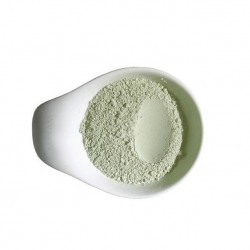
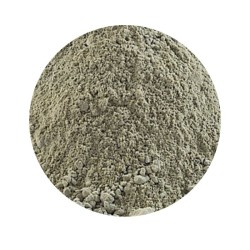
Green clays form in low-oxygen environments and typically retain a mineral-rich composition, including magnesium and elements typical of smectite-type clays (e.g. montmorillonite). They have strong cation exchange and absorption capacities and are often used when the skin needs deep cleansing.
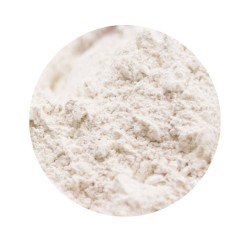
When white clay is formed, water has removed much of the original mineral content. This results in a modest composition with a very low iron content, making kaolin well-tolerated by all skin types and suitable for the care of both dry and sensitive skin.
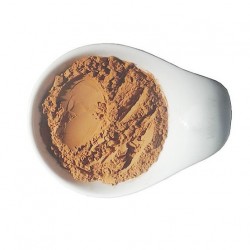
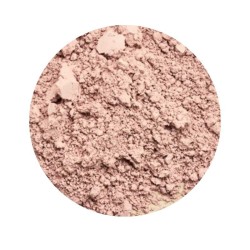
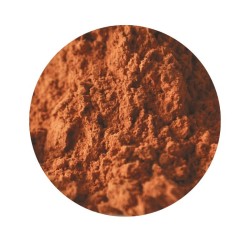
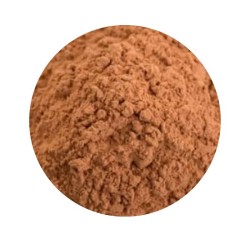
Orange and reddish clays are rich in oxidized iron and form well in oxygen-rich environments. Their warm, vibrant tones have been popular complexion refreshers throughout history.
As a general rule, green clays are the richest in minerals and most active, white clays are the mildest, and red and yellow clays are intensely toning due to their iron content.





Leave a comment