- -10%
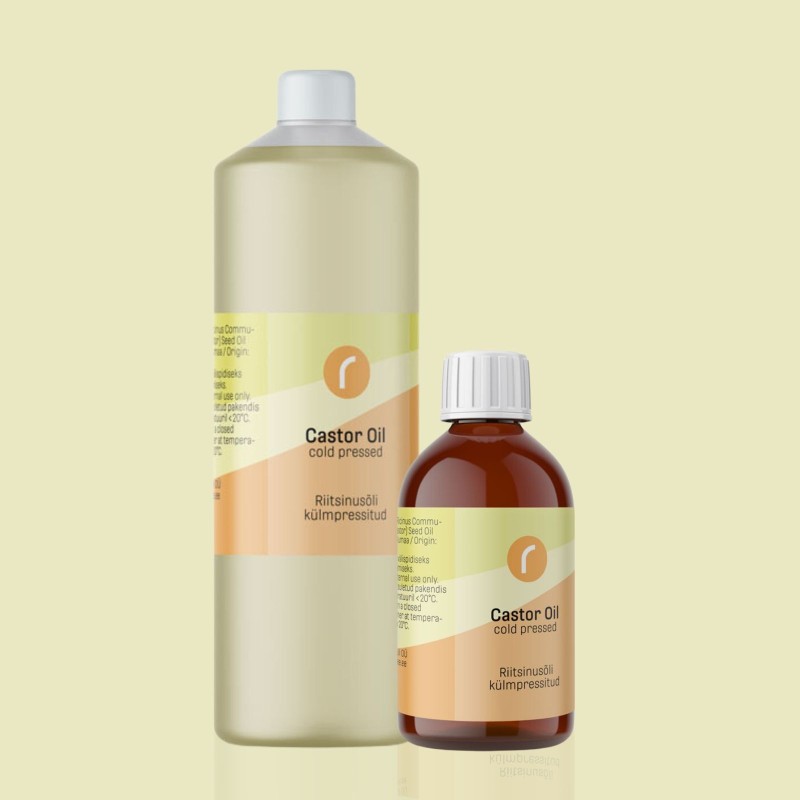


Unit price: €1.98 / 100 g
Lowest price in 30 days: €4.95
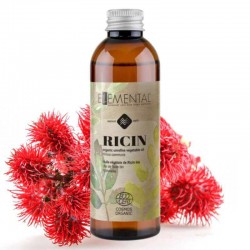
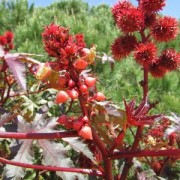
Castor oil's name comes from the Latin name for the castor oil tree, "Ricinus Communis", but in Estonian it is also widely known as castor oil . The name "castor oil" is probably a loanword from other languages: "касторовое масло" in Russian, "castor oil" in English. Castor oil is a moisture-binding oil with a unique composition, which is cold-pressed from the seeds of the Ricinus communis plant. It is one of the most unique base oils in cosmetics - the very high content of ricinoleic acid (88%) gives it properties that are not found in any other vegetable oil.
Moisturizing – ricinoleic acid acts as a humectant, binding moisture to the surface of the skin and hair.
Protective – forms a protective layer on the skin surface, reducing water loss
Soothing – suitable for dry and sensitive skin
Hair and eyebrow care – coats the hair shaft with a protective layer and gives a smooth, shiny appearance
Nourishes nails and cuticles – softens and nourishes
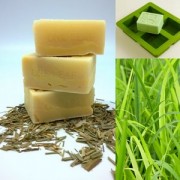
Homemade soap contributes to better foaming.
The fatty acid composition of castor oil is different from all other vegetable oils. Ricinoleic acid makes up 88% of the composition – it is a hydroxylated Omega-9 fatty acid, which is not found in significant amounts in any other vegetable oil. The remaining composition consists of linoleic acid (6%), oleic acid (4%), stearic acid (1%) and palmitic acid (1%).
Ricinoleic acid (88%) It works as a humectant, locking moisture into the skin and hair. By coating the hair shaft with a protective layer, it adds fullness, shine, and helps prevent breakage. In soap, ricinoleic acid creates a stable, creamy, and rich lather. But if used in excess, it can make the soap soft and sticky, so it’s best to use it sparingly.
Linoleic acid (6%) supports the skin's lipid barrier and soothes sensitive skin.
Oleic acid (4%) softens and smoothes the skin.
Stearic acid (1%) and palmitic acid (1%) provide skin protection.
Castor oil is very viscous and when used on hair in its pure form, it can be difficult to wash out and can leave hair feeling heavy or sticky. Castor oil is best used mixed with a lighter oil, such as jojoba oil, sweet almond oil, or argan oil. The exception is when using it on eyelashes, eyebrows, nails, and cuticles, where a thicker texture is an advantage.
Castor oil is suitable for dry, oily and aging skin. Its non-comedogenic properties make it suitable for oily or problematic skin when used correctly. Its high viscosity means it is not suitable for use as a face oil on its own.
Makeup removal (oil cleansing method) – Mix 20-30% castor oil with 70-80% lighter oil, such as sweet almond oil or jojoba oil. Massage into dry skin and remove with a washcloth dipped in warm water. Castor oil helps dissolve makeup and dirt and gently removes residue from the skin.
Lip balm and lip gloss – castor oil adds shine, consistency, and hydration to lip products. Use 10–30% of the product's composition.
Intensive skin care – apply a small amount to dry, rough heels, elbows or other rough skin areas and leave on overnight.
Nail and cuticle care – massage a small amount into nails and cuticles daily to condition and soften them.
Ritual oil is suitable for hair, eyebrow and eyelash care. It is suitable for hair of all porosity levels.
Eyelash and Eyebrow Serum – Apply a small amount every night with a clean eyelash brush. With regular use, it will keep lashes and eyebrows soft, conditioned and shiny, and help reduce breakage. Avoid getting the oil in your eyes.
Scalp and hair mask – mix 50% castor oil with 50% coconut oil or olive oil to make it easier to wash out later. Massage into scalp and hair and leave on for at least two hours. You may need to shampoo twice to wash it out.
Hair conditioning and shine treatment – mix 10-30% of the product with lighter oils, such as argan or sweet almond oil. Apply to the entire length of the hair, leave for 20-30 minutes, then shampoo.
Solid hair conditioners – use 5–15% of the product amount to add manageability and shine.
Castor oil in homemade soap
Ricinoleic acid, found in large amounts only in castor oil, gives soap a long-lasting, thick, creamy lather. But when too much castor oil is used, the soap’s texture can become sticky and soft.
To ensure a pleasant foaming effect, castor oil should be used together with coconut oil. It is sufficient if the proportion of castor oil in the soap fats is 5-10%. The proportion of other fatty acids: linoleic, oleic, palmitic and stearic acids in castor oil is small compared to other vegetable fats.
Castor oil accelerates the saponification process in soap making, causing the mixture to thicken more quickly, so it’s best to avoid using it when creating soaps with intricate designs.
You can add castor oil to the melt-and-pour soap base at a maximum of 10-15 g per 1 kg soap base. Since the finished soap is already a saponified product, adding oil does not make the soap foam better. The oil remains in the soap as oil and the effect is more cosmetic than affecting the properties of the soap. Adding a large amount of oil to the soap base will make its consistency more liquid.
Saponification values: NaOH – 0.128 / KOH – 0.180
Cold-pressed castor oil is for external use only.
INCI: Ricinus Communis (Castor) Seed Oil
Country of origin: India
Production method: Cold pressed, filtered, purified
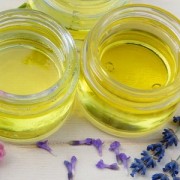
Appearance: Viscous light yellow liquid
Odor: Slight characteristic odor
Comedogenicity: 1 / 4
Storage: Castor oil is very stable and does not go rancid easily. Storage: Store in a closed container at room temperature, away from direct sunlight.

Data sheet
You might also like
 How to make massage oil