
Blog categories
Search in blog
Telli uudiskiri

Soovid saada teavitusi uute toodete, retseptide ja sooduspakkumiste kohta? Liitu uudiskirja saajatega siin

Massage oil is one of the easiest cosmetic products to make yourself – you don't need a lot of ingredients or complicated tools. The most important thing is how it feels on your skin and how the oil glides under your hand.
Good glide The oil should allow your hands to glide over your skin without friction. An oil that absorbs too quickly will make the massage uncomfortable, while an oil that absorbs too slowly will leave your skin feeling greasy hours later.
Absorption rate A good massage oil absorbs slowly enough to last until the end of the massage, but quickly enough so that the skin is not left oily after the massage.
Skin type compatibility is especially important when you are making oils for different skin types: a darker oil for dry skin, a lighter blend for oily or sensitive skin, a nourishing blend for mature skin.
The main component of vegetable oils is fatty acids, and the fatty acid composition of each vegetable oil determines how it behaves on the skin. When choosing a massage oil, the most important things to pay attention to are two fatty acids: oleic acid and linoleic acid.
Oleic acid (omega-9) Oils high in oleic acid are absorbed at a medium rate, glide well, and soften and nourish the skin. Sweet almond oil, apricot kernel oil, and macadamia oil are rich in oleic acid.
Linoleic acid (omega-6) Oils high in linoleic acid are absorbed faster, are lighter, and leave the skin less oily. They support the skin's lipid barrier better, but are less slippery. These oils are better suited for oily or problematic skin. Grapeseed oil, for example, falls into this category.
Palmitoleic acid (omega-7) is a natural component of the skin's own sebum, the amount of which decreases with age. Macadamia oil is the richest plant source of this among common oils, making it particularly suitable for mature skin. It is also found in sea buckthorn oil and
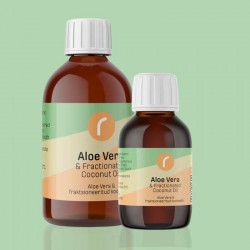
Medium-chain triglycerides Caprylic and capric acids contained in fractionated coconut oil are quickly absorbed, do not leave the skin greasy, glide perfectly, are completely odorless, persistent and have a long shelf life.
Oleic acid-rich base oils: nourishing, with good glide
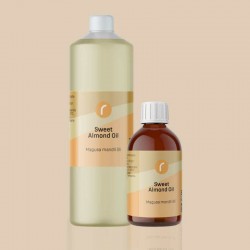
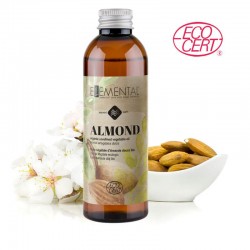
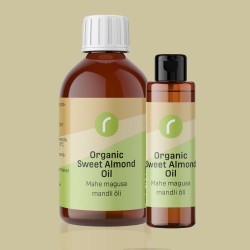
Sweet almond oil (oleic acid ~63%, linoleic acid ~22%) is the most common base oil for massage. It glides on well, absorbs quickly, is almost odorless, and is suitable for many skin types. Since it comes from nuts, it is not suitable for nut allergies.
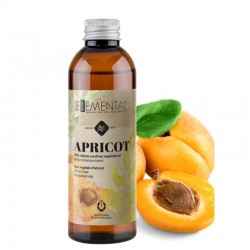
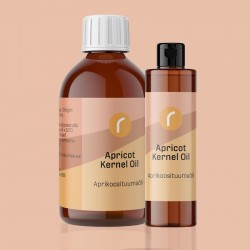
Apricot kernel oil (oleic acid ~65%, linoleic acid ~22%) is the closest alternative to sweet almond oil – lighter and silkier, absorbs a little faster, and also has a neutral scent.
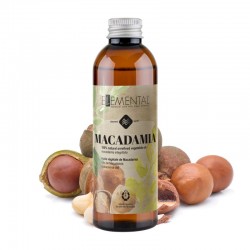
Macadamia oil (oleic acid ~60%, palmitoleic acid ~20%) is the richest oil in this group. Its high palmitoleic acid content makes it particularly suitable for mature, dry or tired skin. Despite its high oleic acid content, it leaves the skin feeling silky, almost dry.
Balanced and light base oils
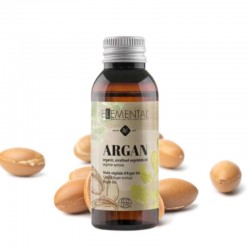
Argan oil (oleic acid ~46%, linoleic acid ~37%) is suitable for many skin types, including combination and slightly oily skin. It absorbs quickly, does not leave the skin greasy, and the content of vitamin E and squalene provides a mild anti-aging effect.
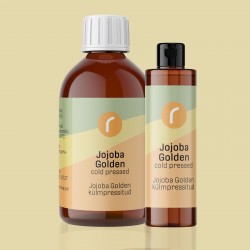
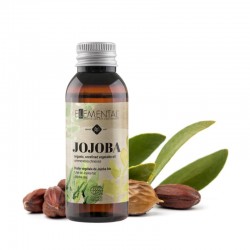
Jojoba oil does not oxidize or go rancid like regular oils, glides on easily, and is suitable for all skin types, including sensitive and problematic skin.
Linoleic acid-rich base oils: light, quickly absorbed
These oils are suitable for those who prefer lighter oils and for products designed for oily, problematic or combination skin that does not respond well to richer oils.
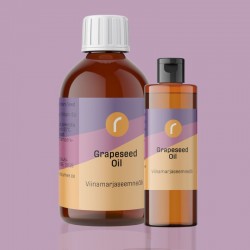
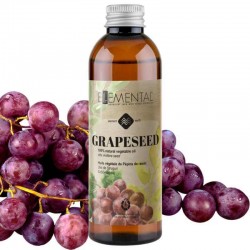
Grapeseed oil (linoleic acid ~60%, oleic acid ~27%) is light, quickly absorbed, almost odorless and low in comedogenicity. Antioxidants provide additional mild anti-aging benefits.
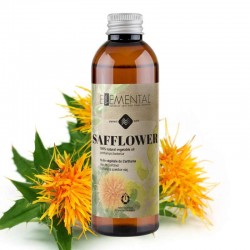
Safflower oil (linoleic acid ~72%, oleic acid ~12%) has the highest linoleic acid content and the lightest skin feel – it is absorbed almost immediately.
Neutral base oil: Fractionated coconut oil (MCT)
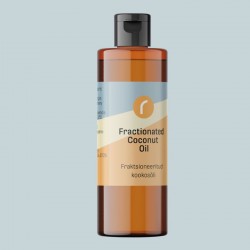
Fractionated coconut oil (caprylic acid ~60%, capric acid ~40%) always remains liquid, is odorless and colorless, glides perfectly, is suitable for all skin types, and has a long shelf life.
Regular coconut oil as a massage oil
Regular coconut oil melts into a liquid when warmed by skin and hands, spreads easily, and has antibacterial properties thanks to lauric acid. Unrefined coconut oil is great for baby massages, but its high comedogenicity can be an issue for daily use. On problematic skin, it may cause breakouts on the back, shoulders, and chest.
Using additional oils in massage
These oils work well to enhance the base oil in a massage blend, bringing extra benefits to the mixture. They’re typically added in concentrations of 5–20%.
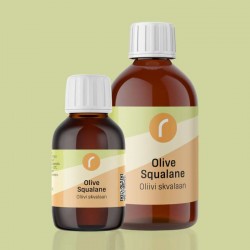
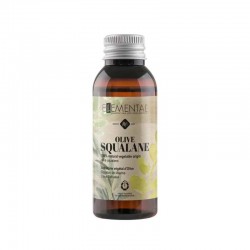
Olive squalane is light, silky, colorless and odorless. It absorbs quickly, does not leave a greasy film on the skin and is suitable for all skin types, including sensitive and problematic skin. Since squalane is similar to the skin's own sebum, the amount of which decreases with age, it is also suitable for mature skin. It is not a richly nourishing oil, but gives the product a lighter skin feel. Use 10-20%
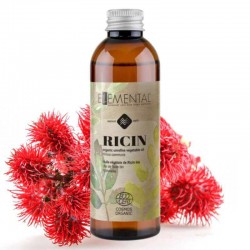
Adding castor oil boosts slip, but using over 10% can make it sticky.
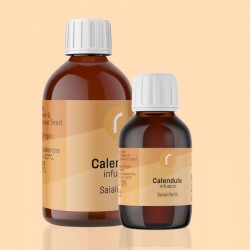
Calendula oil is suitable for sensitive, reactive or easily irritated skin. The infusion oil enriches with anti-inflammatory and soothing properties thanks to the flavonoids, carotenoids and triterpenoids found in calendula.
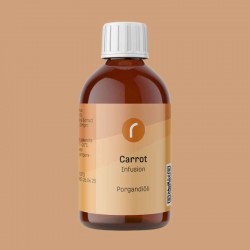
Carrot oil The beta-carotene in the oil gives it a golden appearance and helps to brighten the complexion.
90% sweet almond oil
10% jojoba oil,
1% aroma oil or essential oil,
0.2% vitamin E.
Once you have the basic recipe in place, you can start experimenting with specialty oils – macadamia oil for mature skin, calendula oil for sensitive skin, carrot oil for summer body care products.
80% apricot kernel oil
20% calendula oil
fragrance less than 1% or leave unscented
Vitamin E 0.1–0.5%
70% Fractionated Coconut Oil
20% grape seed oil
10% jojoba oil
essential oils 1-2%
To make your own massage oil, you can weigh all the ingredients directly into the bottle where you plan to store the product. Close the cap and shake well. The most important thing is to mix the fragrances with the other oils properly.
Massage oil remains on the skin and the fragrance remains in contact with the skin for a long time, which is why the risk of irritation is greater than with rinse-off products.
Natural essential oils or artificial fragrance oils can be used to scent massage oil. Essential oils tend to be more volatile, with their scent evaporating quickly, while fragrance oils are longer-lasting.
Amount of scent
The recommended maximum dosage is 3% of the total weight of the recipe.
0.5-1% – sensitive skin and testing new mixtures
2 – 3% – in intensely fragranced recipes
1% of 100 g of product means 1 g of fragrance. For more accurate dosing, we recommend weighing rather than counting drops. However, for smaller quantities, you can consider that 1 gram is approximately 20 drops.
Always check the IFRA limit for a specific oil before use. Massage oil is classified as IFRA category 5A and the maximum permitted level for this category cannot be exceeded for safe use.
It’s always a good idea to start with a small amount of fragrance and add more if needed. Besides skin sensitivity, it’s important to think about the fragrance’s intensity—some people prefer a lighter, quick-evaporating scent, while others enjoy one that lingers for hours.
Oils high in linoleic acid – such as grapeseed and safflower oil – oxidize more quickly than oils high in oleic acid or saturated oils. Vitamin E can be added to improve the shelf life of the oil at 0.1–0.5% of the total weight. Store massage oil in a closed bottle, away from light and heat.




Leave a comment