
Unit price: €9.00 / 100 ml
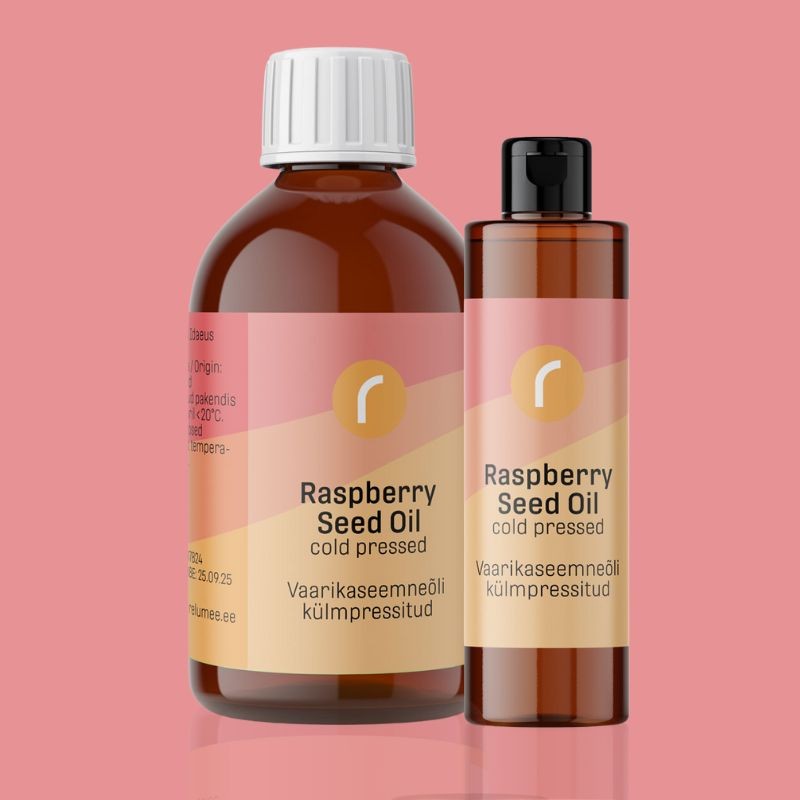
Cold-pressed raspberry seed oil is a lightweight, fast-absorbing oil that works wonders for dry, problematic, combination, or aging skin. With its antibacterial and anti-inflammatory properties, it’s also great for sensitive or troubled skin, as it won’t clog pores.
Raspberry seed oil – a light active oil for aging, uneven complexion and sun-exposed skin
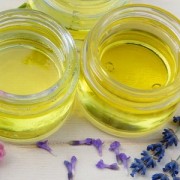
Raspberry seed oil is cold-pressed from the seeds of the red raspberry bush (Rubus idaeus). The golden yellow oil has a light texture, absorbs quickly and leaves a delicate, subtle grassy scent. Wax and other pressing residues are separated by screening without chemical additives, which preserves the oil's characteristic color and scent.
Its high linoleic and linolenic acid content, along with vitamins A and E and polyphenolic antioxidants, including ellagic acid, makes it suitable for use in products targeting aging, uneven complexion, sun-exposed, and oily or acne-prone skin.
Raspberry seed oil has an unusually high content of polyunsaturated fatty acids: linoleic acid (56%), linolenic acid (15%), oleic acid (20%), palmitic acid (5%), and stearic acid (3%).
Linoleic acid (56%) is an Omega-6 fatty acid that supports the skin's lipid barrier, reduces water loss, soothes sensitive skin and helps balance oily skin. Oily and acne-prone skin is often deficient in linoleic acid, and its supplementation helps restore balance.
Linolenic acid (15%) is an Omega-3 fatty acid that soothes the skin, helps reduce the appearance of redness and irritation, and supports a smooth skin feel. The relatively high Omega-3 content – unusual among seed oils – is one of the reasons why raspberry seed oil is well suited for the care of easily irritated and sun-exposed skin.
Oleic acid (20%) softens and smoothes the skin and helps other oil-soluble ingredients to be better absorbed.
Palmitic acid (5%) forms a protective layer on the skin and supports the barrier function.
Stearic acid (3%) helps retain moisture in the skin and leaves it feeling soft, supple.
Vitamin A and E – Vitamin A (compounds derived from carotenoids) helps reduce the appearance of fine lines and age spots. Vitamin E acts as an antioxidant and contributes to oil stability.
Ellagic Acid and Polyphenols – Raspberry seed oil contains ellagic acid, a polyphenol with antioxidant properties. As an antioxidant, it helps protect the skin from free radicals and supports the appearance of a more even complexion.
Laboratory studies of raspberry seed oil have shown that the oil partially absorbs UVB radiation, but it lacks measurable and reliable SPF and UVA protection, so it does not replace sunscreen or provide reliable sun protection.
Raspberry seed oil is suitable for dry, normal, oily, problematic and aging skin. Its light texture makes it a convenient daily facial oil.
Use of raspberry seed oil in cosmetics
Facial oils and anti-aging serums – use in a blend with other active oils, such as rosehip or sea buckthorn oil, or with lighter base oils, such as jojoba oil or squalane. It can be used as the main ingredient in powerful anti-aging products.
Skin-evening serums – Due to its ellagic acid content, raspberry seed oil is used in recipes aimed at achieving a more even complexion. Best results are achieved when used in combination with niacinamide.
After-sun products – its soothing properties make it a suitable ingredient in after-sun products. The recommended dosage is 5–15%.
Creams and lotions – use 5–15% of the product volume for antioxidant and skin-conditioning benefits.
Eye products – its light texture and nourishing properties make it suitable for use in eye serums and creams. Use 5–10% of the product.
Raspberry seed oil is suitable for products designed for high porosity hair, where the combination of linoleic and linolenic acids helps strengthen the hair shaft and reduce moisture loss. It is too light for low or medium porosity hair to provide significant benefits.
Raspberry seed oil's high polyunsaturated fatty acid content means it doesn't add hardness to soap, and using large amounts can shorten the shelf life of soap. Therefore, this oil doesn't find significant use as an ingredient in soap. If you want, you can add a small amount as an additional fat for skin care benefits.
INCI: Rubus Idaeus Seed Oil
Country of origin: Poland
Production method: Cold pressed, filtered
Appearance: Golden yellow liquid
Smell: Gentle, subtle grassy scent
Comedogenicity: 0–1/4
Storage: Due to its high content of polyunsaturated fatty acids, the oil is susceptible to oxidation. Store in a closed container in a cool, dark place, away from direct sunlight.

Data sheet
 How to make massage oil
 Cold-pressed raspberry seed oil is a lightweight, fast-absorbing oil that works wonders for dry, problematic, combination, or aging skin. With its antibacterial and anti-inflammatory properties, it’s also great for sensitive or troubled skin, as it won’t clog pores.