- -10%


Unit price: €4.50 / 100 ml
Lowest price in 30 days: €4.50
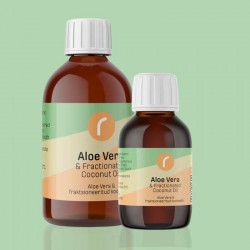
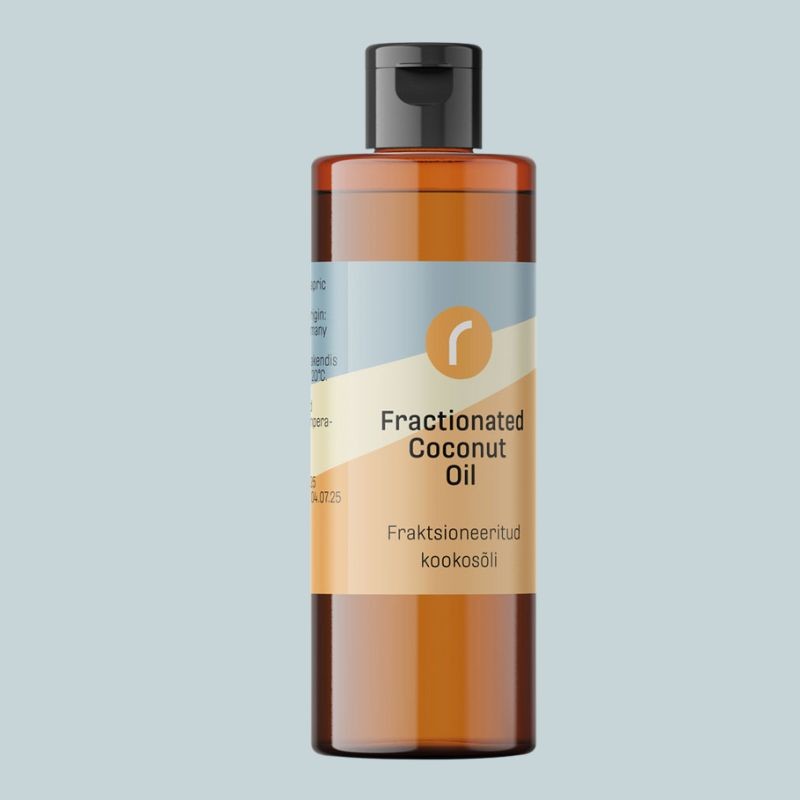
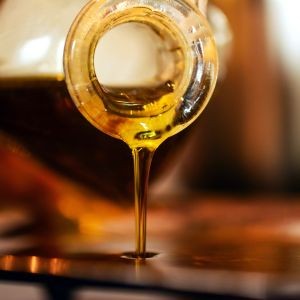
Fractionated coconut oil is a light and fast-absorbing oil that does not leave greasy residue.
Fractionated coconut oil is made by separating the solid fatty acids from coconut oil. The resulting oil is liquid even at low temperatures.
The transparent oil with a neutral smell is suitable for use in creams, balms, products for children or massage oils, as a base oil in essential oil blends, and for making oil-based perfumes. The oil is suitable for all skin types as it does not clog pores.
INCI: caprylic/capric triglycerides
Fractionated coconut oil is produced from coconut oil by removing the long-chain fatty acids, including lauric acid, leaving only the medium-chain triglycerides – caprylic acid (C8, 60.1%) and capric acid (C10, 39.9%). The result, also known as MCT oil or caprylic/capric triglyceride (CCT), is a permanently clear, colourless, odourless liquid that stays liquid even at low temperatures and never solidifies.
Fractionated coconut oil has no scent, no colour, and a very light skin feel. It is one of the most neutral and universally compatible carrier oils available, which makes it useful across an exceptionally wide range of applications.
Regular coconut oil is dominated by lauric acid (~50%), a long-chain saturated fatty acid that gives coconut oil its solid form at room temperature and its antimicrobial properties. Fractionated coconut oil removes these long-chain acids entirely.
Caprylic acid / C8 (60.1%) is a medium-chain saturated fatty acid. It absorbs quickly and penetrates the skin efficiently without leaving a greasy feel.
Capric acid / C10 (39.9%) is also a medium-chain saturated fatty acid. Together with caprylic acid it gives fractionated coconut oil its characteristically clean, light skin feel.
Because medium-chain triglycerides are fully saturated, they are extremely stable and resistant to oxidation.
Fractionated coconut oil suits all skin types. Its light, fast-absorbing texture makes it one of the most comfortable oils to use on both face and body. It works equally well as a standalone product and as a carrier for active ingredients.
Massage oils – one of the most widely used massage oil bases due to its excellent slip, light skin feel, and complete absence of scent. Add essential oils at 1 ml per 100 ml of carrier.
Essential oil blends and roll-ons – fractionated coconut oil is the preferred carrier for diluting essential oils. It dissolves essential oils completely, stays stable indefinitely, and does not leave a greasy residue. Use at 95–99% of the formula with essential oils at 1–5%.
Oil-based perfumes – use at 90–99% as the carrier for fragrance oils or essential oil blends.
Body oils and facial oils – use at 50–100% as a lightweight base, or blend with other active oils to add skin feel and extend shelf life.
Creams and lotions – add to the oil phase at 5–15% to lighten texture and improve spreadability.
Baby and children's products – its gentle, non-sensitising profile makes it well suited for baby oils, massage products, and sensitive skin formulations. Use at 80–100%.
Lip balms and salves – use at 10–20% to add a light, flexible feel alongside harder butters and waxes.
Solid perfumes and anhydrous balms – a useful liquid component to balance the texture of wax-heavy formulations.
Fractionated coconut oil is lighter than whole coconut oil and suits a wider range of hair types. It coats the hair shaft without weighing it down, adds shine, and reduces frizz.
Hair oils and serums – Works particularly well on fine or low porosity hair where heavier oils feel too heavy.
Scalp treatments – apply directly to the scalp as a lightweight conditioning treatment. Leave for 20–30 minutes and shampoo out.
Fractionated coconut oil does not behave like whole coconut oil in cold process soap. Because the long-chain fatty acids have been removed, it does not contribute lather, hardness, or cleansing properties in the same way. It is not recommended as soap oil.
Tech specs
INCI: Caprylic/Capric Triglyceride
Manufacturing method: Fractionated from coconut oil
Appearance: Clear, colourless liquid; stays liquid at all temperatures
Scent: Odourless
Comedogenicity: 0–1 / 4
Store in a sealed container at room temperature away from direct sunlight. Available in 100 ml, 250 ml, and 1 L bottles.

Data sheet
You might also like
 After-sun body oil
  How to make massage oil
 Fractionated coconut oil is a light and fast-absorbing oil that does not leave greasy residue.
Fractionated coconut oil is made by separating the solid fatty acids from coconut oil. The resulting oil is liquid even at low temperatures.
The transparent oil with a neutral smell is suitable for use in creams, balms, products for children or massage oils, as a base oil in essential oil blends, and for making oil-based perfumes. The oil is suitable for all skin types as it does not clog pores.
INCI: caprylic/capric triglycerides