
Unit price: €6.00 / 100 ml
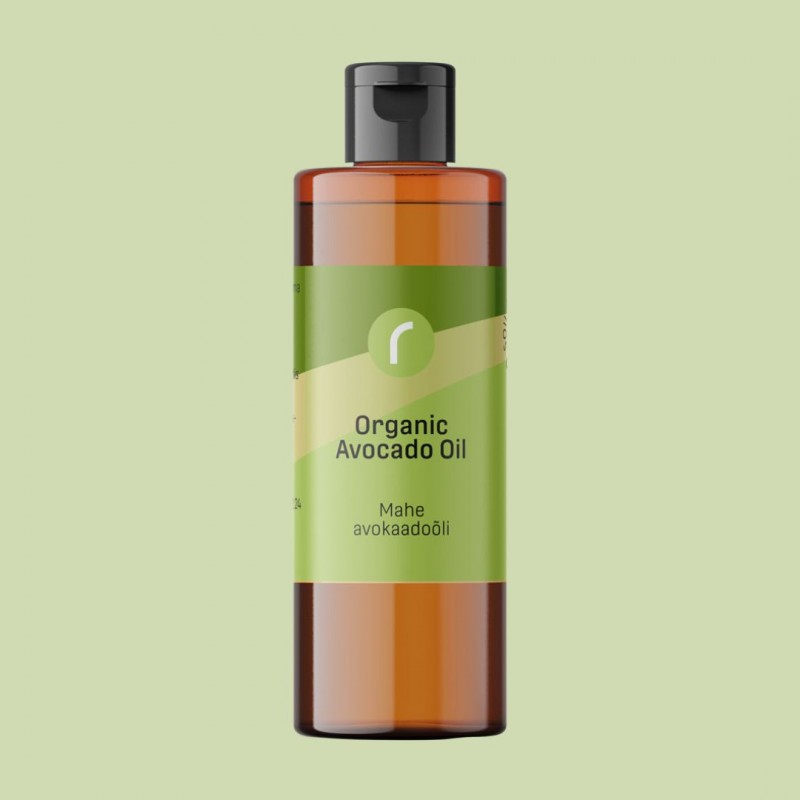
Organic avocado oil is cold pressed from avocado fruits. The oil's green color and pleasant "grassy" smell have been preserved during processing. Avocado oil is rich in carotenoids, phytosterols, vitamins, and essential fatty acids that give it nourishing, emollient, and restorative properties.
Avocado oil is thick and nourishing, and especially suitable for dry and aging skin. It helps to balance the production of palmitoleic acid, which decreases with aging. The lion's share of avocado oil is oleic acid, which helps speed up sebum production. This feature is beneficial for dry skin, but can cause problems for acne-prone skin. Palmitic acid makes up a fifth of the composition of avocado oil. It creates a protective layer on the skin's surface and prevents moisture from evaporating.
Organic avocado oil is a nourishing oil for dry, aging and nutrient-poor skin
Organic avocado oil is cold-pressed from the fruit of Persea gratissima. The unrefined oil has retained its characteristic deep green color and delicate grassy aroma. The oil contains natural sediment and may thicken or solidify at lower temperatures.
Avocado oil is one of the richest and most nutritious vegetable oils. Its high content of oleic acid, palmitoleic acid, vitamins, carotenoids and phytosterols makes it particularly suitable for dry, aging and nutrient-poor skin. It absorbs more slowly than lighter oils, making it better suited to oil blends than as a daily facial oil in its pure form.
High palmitoleic acid content – Omega-7 fatty acid production in the skin decreases with natural aging, avocado oil helps compensate for this.
Rich in vitamins A, D and E – provides antioxidant protection
Contains carotenoids and phytosterols – antioxidant effect, supports the skin's protective barrier
Suitable for dry, normal and aging skin
Not suitable for oily or problematic skin – high oleic acid content can unbalance oily skin and promote pore clogging
The characteristic green color and smell remain in the finished product.
Oleic acid (63%) is an Omega-9 fatty acid that provides rich moisture to the skin, helps keep it soft and smooth, and supports the skin's barrier function. It is well absorbed and is suitable for dry and aging skin. In problematic skin, high levels of oleic acid can throw the skin's sebum production out of balance and contribute to clogged pores - avocado oil is not suitable for this skin type. In soap, oleic acid reduces foaming, but adds caring properties.
Palmitic acid (18%) forms a protective layer on the skin and helps retain moisture. In soap, it provides hardness and a creamy lather.
Palmitoleic acid (6%) is an Omega-7 fatty acid that is similar to the fatty acids naturally produced by the skin. The skin's own production of palmitoleic acid decreases with age, which is why avocado oil is especially valued in products for aging skin. It helps reduce water loss.
Linoleic acid (10%) supports the skin's lipid barrier, helps reduce flaking caused by dryness, and soothes sensitive skin.
Stearic acid (1%) helps retain moisture in the skin and leaves it soft.
Linolenic acid (1%) soothes the skin and helps reduce the appearance of redness.
Vitamins A, D and E – Avocado oil is a natural source of fat-soluble vitamins, which help protect the skin from oxidative stress. Vitamin E acts as an antioxidant and contributes to the stability of the oil.
Carotenoids and phytosterols – The green color of unrefined avocado oil comes from chlorophyll and carotenoids, which have antioxidant properties. Phytosterols support the skin barrier.
Avocado oil is suitable for dry, normal and aging skin. It is one of the best choices for very dry, flaky or nutrient-poor skin that needs a richer oil. It is not suitable for oily or problematic skin.
The slow absorption rate means it is best mixed with lighter oils rather than used as a daily facial oil in its pure form, unless the skin is very dry and needs extra richness.
Intensive facial oils and anti-aging blends – use 20–50% in a blend with lighter oils such as jojoba oil, squalane or rosehip oil. The palmitoleic acid content makes it particularly suitable for products for aging skin.
Rich body oils and dry skin care products – Suitable for very dry and easily irritated skin and rough, dry skin areas.
Hair masks and intensive hair treatments – Avocado oil penetrates deeper into the hair shaft than many other oils, making it effective for dry, damaged or high porosity hair. Apply to hair before washing and leave on for at least 30 minutes.
After-sun care – its soothing properties and vitamin content make it useful in after-sun products.
Avocado oil penetrates the hair shaft well and is suitable for dry, damaged and high porosity hair. It adds moisture, helps reduce breakage and makes hair easier to comb.
Hair masks and pre-wash treatments – use neat or mix with lighter oils. Apply to dry hair, leave on for 30–60 minutes and shampoo.
Hair oils and serums – use in a mixture with lighter oils, such as jojoba oil or argan oil. Too much avocado oil in its pure form can feel heavy on medium porosity hair.
In cold-process soap, avocado oil provides nourishing and skin-softening properties. The combination of oleic acid and palmitic acid provides a soft, nourishing soap with a creamy lather. Combine with coconut fat to improve lather and hardness. Recommended dosage 10–30% of the total weight of fats. Unfortunately, the original green color of the soap will not remain.
Saponification values: NaOH – 0.133 / KOH – 0.188
Avocado oil may thicken or solidify at temperatures below 10°C – this is normal. Allow to warm to room temperature before use. A natural precipitate at the bottom of the bottle is also normal and does not affect quality.
INCI: Persea Gratissima (Avocado) Oil
Production method: Cold pressed, non-deodorized
Appearance: Thick, green liquid, contains a precipitate and may thicken or solidify at lower temperatures
Smell: Characteristic grassy smell
Storage: Store in a closed container in a cool, dark place.
For external use only.
Packaging: Available in 100 ml and 250 ml plastic bottles.
Data sheet
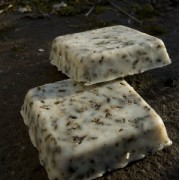
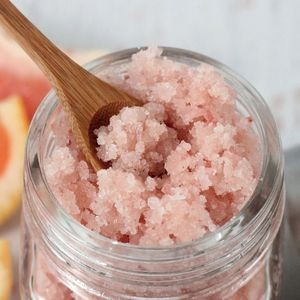 Peppermint foot scrub
 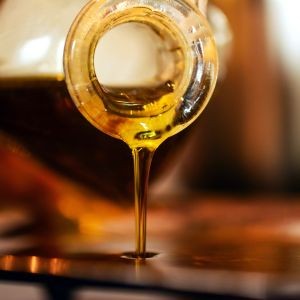 How to make massage oil
 Organic avocado oil is cold pressed from avocado fruits. The oil's green color and pleasant "grassy" smell have been preserved during processing. Avocado oil is rich in carotenoids, phytosterols, vitamins, and essential fatty acids that give it nourishing, emollient, and restorative properties.
Avocado oil is thick and nourishing, and especially suitable for dry and aging skin. It helps to balance the production of palmitoleic acid, which decreases with aging. The lion's share of avocado oil is oleic acid, which helps speed up sebum production. This feature is beneficial for dry skin, but can cause problems for acne-prone skin. Palmitic acid makes up a fifth of the composition of avocado oil. It creates a protective layer on the skin's surface and prevents moisture from evaporating.