
Blog categories
Search in blog
Telli uudiskiri

Soovid saada teavitusi uute toodete, retseptide ja sooduspakkumiste kohta? Liitu uudiskirja saajatega siin

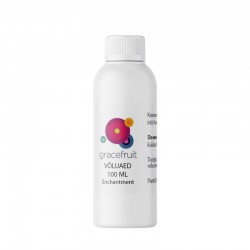
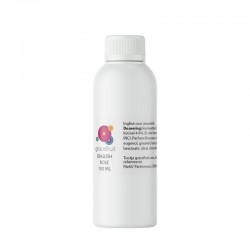
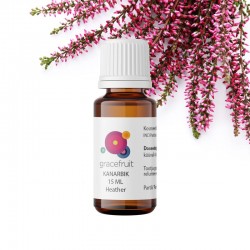
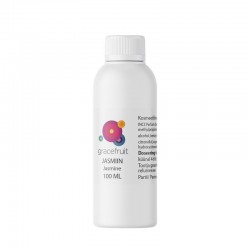
Gracefruit has ceased operations, but we continue to work with their long-time manufacturing partner to ensure the availability of their most popular fragrance oils.
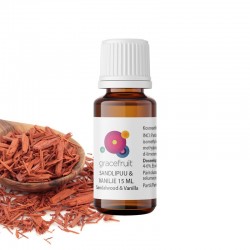
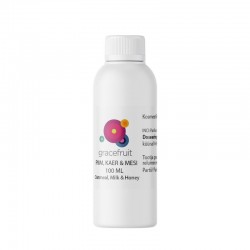
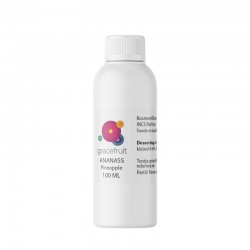
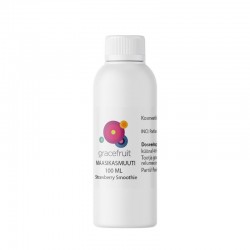
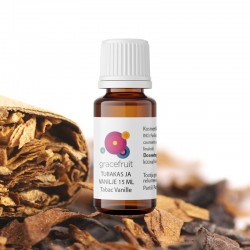
You can order a selection of scents from our website. Additional scents can be ordered as a special order starting from 5 kg. As these products are made to order, the minimum delivery time is 8-10 weeks . The product's best-before date is two years from the date of manufacture.
The price of the product depends on both the total volume of the order and the number of scents combined in one order. Delivering a 5 kg batch made for only one customer is more expensive per unit. If you have time to wait with the order and we can combine the order, the price is more favorable.
We provide updated documentation:
Please send inquiries about special orders to order@ .
From the summer of 2021, Gracefruit aroma oil distributor in the Baltics and Finland. In fact, the cooperation between Gracefruit owner Elizabeth and me began in 2009, when Gracefruit was one of my first raw material suppliers. Elizabeth has influenced and taught me a lot. From her I got my first knowledge about raw material selection and learned the finer nuances of paperwork in the cosmetics industry. At that time, information about soap and cosmetics was not as widely available as it is now. I am very grateful for this knowledge!
Gracefruit aroma oils were previously sold at Hobbypunkt and later under the brand. In connection with Brexit, shipping goods from the United Kingdom to European Union countries, including Estonia, is complicated and expensive due to customs procedures, especially if the ordered quantities are not very large. Therefore, Gracefruit has stopped transporting small shipments to Europe, continuing to serve customers through partner companies. I am pleased that is one of Gracefruit's partners. In order to make the products easy to find even for those who do not know Relumee, Gracefruit aroma oils will henceforth be under the Relumee Gracefruit brand. You will also find the English (original) names of the aroma oils in the product descriptions.
Elizabeth's favorite topic is soap making, so the essential oils have been thoroughly tested from the aspect of soap making. How does an essential oil affect the color of the soap, how does it thicken? Knowing these details in advance makes it easier to start new experiments! If you go to the Gracefruit essential oils category, you can also filter essential oils by these parameters.
Gracefrut fragrances also include a wide range of allergen-free fragrance oils. If you are making cosmetic products for yourself or your family and you know that you do not have any sensitivities, the presence of allergens is not a decisive factor. However, if there are more users of the product, according to European Union law, users must be informed about the allergen content in the product.
As mentioned above, essential oils can be quite fiddly in soap. They change color, stick to the pot, or turn brown… Some of these problems are easy to fix, but others you have to accept. The reward is heavenly-smelling soaps!
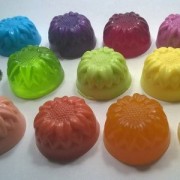
Aromatic oil can color the soap yellow, pink or brown. The color of the soap mass affects both /en/4611-soap-masses"> soaps made from soap mass as well as homemade soaps (both cold and hot methods). To a small extent, it is possible to improve the situation by using white dye in the soap /en/806784-titanium dioxide.html">titanium dioxide, but it is still not possible to turn dark brown soap into snow-white. The main culprit is vanillin, which turns the soap brown. The discoloration usually occurs within a few days. The reaction occurs when it comes into contact with air, and therefore the soap begins to darken from the outside inward. For example, when you cut open a round-shaped bar of soap, the soap may be brown on the outside and light on the inside, but eventually the discoloration will reach the center of the soap.
Another interesting solution is to add only a portion of the aromatic oil to the soap. Then, you can pour a layered or sigri-migri patterned soap into the mold, and then the result is a two-color soap.
The saponification of the soap mixture is accelerated the most by various floral scents. While combating the discoloration of the soap mass is an impossible mission, the problem of soap sticking to the pot is easier to avoid. This problem occurs specifically /en/blog/postitus/kuelmmeodotil-seep">There are no such concerns when making soap using the cold method , making soap from soap mass, and making soap using the hot method.
What happens when saponification is accelerated? Saponification is accelerated, meaning that the soap mixture becomes thick very quickly: you can barely mix in the essential oil when the mixture is already so thick that it is no longer possible to pour the soap into the mold. This reaction can also occur if the soap recipe contains a lot of solid fats.
If the aroma oil wants to speed up saponification, be prepared for it. The countermeasure is of course to slow down saponification. How do you do that?
If the desired temperature range for making soap is 30-50 degrees, then it is worth mixing the soap mixture at the lower end of this scale, i.e. at 30 degrees.
Mix the essential oil into the soap mixture while it is still quite liquid. After adding the essential oil, do not mix with a hand blender anymore, but with a spoon. If the mixture is already so thick that a mark starts to appear on the surface of the soap, immediately lift the soap into the mold. However, you must make sure that the essential oil is mixed in properly.
If there is a risk that saponification will occur very quickly, the amount of water should be at least 330 g for each kg of fat.
Increasing the amount of water also has side effects - if you have previously used a smaller amount of water, more water will evaporate from the soap when you change the amount of water and the weight of the soap will decrease more than usual during subsequent preparation.
/en/blog/postitus/kuummetodil-seebi-verstamen">With the hot method, the saponification of the soap mass occurs before the aromatic oil is added. Therefore, the aromatic oil does not affect the saponification speed. If you have not encountered the hot method before, keep in mind that the appearance of the soap will be slightly different from soap made with the cold method. However, the bonus is that the soap will be ready faster.
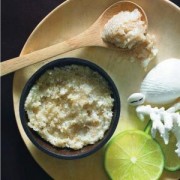
As a result of the shrinkage of the soap mixture, instead of a uniform soap mixture, there are grains floating in the oil, resembling cottage cheese or sour milk. This reaction occurs when the aromatic oil reacts with the solid fats in the soap, which then quickly saponify and remain in the mixture in lumps. Sometimes the problem is solved by continuing to stir the soap mixture, but this is not always useful, the oil remains separate from the mixture and does not turn into soap.
I have experienced this type of shrinkage more than once with Strawberry Smoothie aroma oil, and one customer has also complained about shrinkage with Linden Blossom aroma oil (I have used it myself and have not had this problem). Slow mixing with a spoon and a low temperature of 30 degrees Celsius also help prevent shrinkage.
Hopefully, the above information hasn't put you off soap making or essential oils. If you're worried about the hassles of using essential oils, choose essential oils that don't speed up saponification or do so only slightly. In that case, you don't need to worry about surprises. While using essential oils in soap can be more complicated than essential oils, their scent range is infinitely wider, the scent is longer-lasting and more intense, and you need to use less fragrance.
In soap mass, 10 ml of aroma is sufficient per 1 kg of soap mass. For homemade soap, the amount is calculated based on the weight of the fats used. When making soap using the cold method, the consumption of aroma oil is higher: 30 grams per 1 kg of fats, while for the hot method, 15-20 grams is sufficient.
When making small quantities of products, you can consider that 1 gram of aroma oil is about 20 drops. For larger quantities, the oil must be weighed. Aroma oils have different weights, some are thicker and heavier, others are more liquid and lighter. Therefore, the weight of 10 ml of aroma oil can vary quite a bit.
Gracefruit fragrance oils are not intended for use in lip balms, but you can successfully use them in other cosmetic products. The manufacturer recommends using a 1-3% concentration in cosmetic products. In my experience, 1% already gives a very intense scent. In addition to this general amount, it is also worth observing the IFRA restrictions for the specific oil. For example, many fragrances have a limit of less than 1% for use in deodorants, because the skin under the armpits is very sensitive.
When using fragrance oils, IFRA restrictions are an important guide for cosmetics manufacturers. Ifra restrictions are calculated based on the concentration of ingredients in the fragrance oil. For example, because the skin on the face is more sensitive than the skin on the hands, the amount of fragrance allowed in these areas is different. You can find detailed IFRA restrictions on the product page.
It is definitely worth testing scented candles before making a large quantity. Adding scented oil will worsen the burning properties of the candle. If you are making candles with several different scents, they may require wicks of different thicknesses. Nature Wax C3 /en/806548-soy wax- nature-wax-c3.html">When using soy wax, add the fragrance to the melted wax at 80-85 degrees, stir for a few minutes and then let it cool until the wax starts to become slightly cloudy, then pour into a mold. The fragrance properties of candles improve as they stand, so it is worth letting the candle stand for 1-2 weeks before burning.
We hope that the instructions provided here have been helpful in using essential oils. However, we recommend that you always make a small test batch before making a larger batch of new products. Different ingredients can sometimes react in surprising ways when combined.







Leave a comment