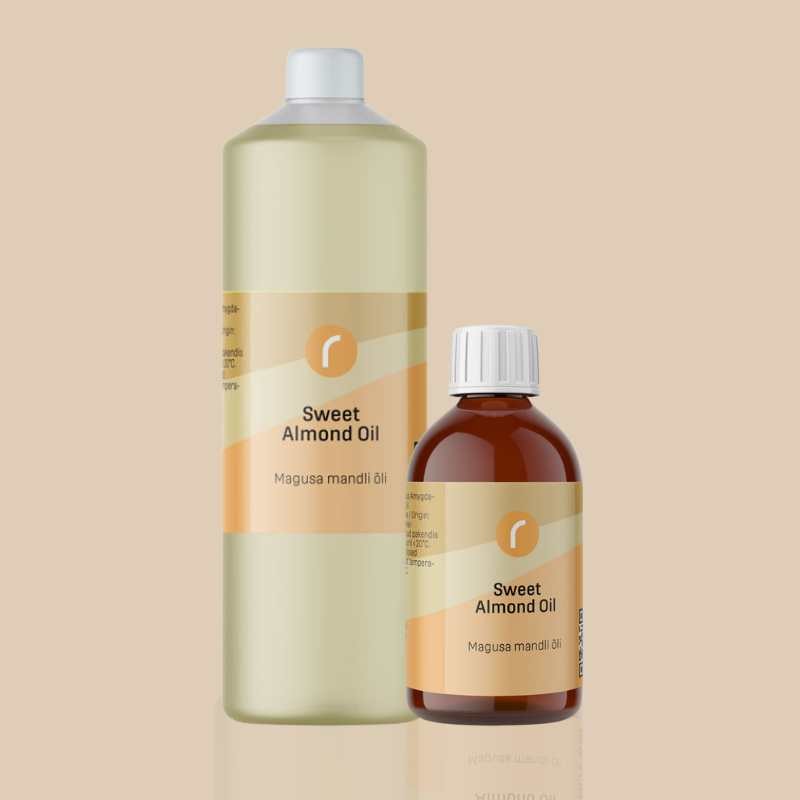

Unit price: €4.00 / 100 ml
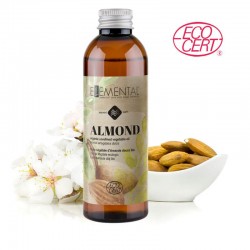
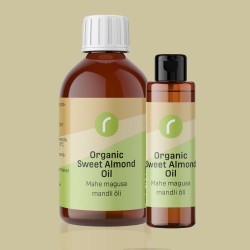
Food-grade Sweet almond oil is pressed from the ripe, unshelled seeds of the almond tree.
Almond oil is a mild base oil, which is an ideal component in the composition of creams, ointments and body butters, and is well suited as a base oil for making massage oil.
Sweet almond oil is suitable for dry and sensitive skin and hair with all types of porosity. The oil softens and smoothes the skin. In hair care products, almond oil helps to strengthen brittle hair. In skin care products, almond oil makes the skin more elastic. The gentle oil is suitable as a body care product during pregnancy and also as a skin care product for babies and children.
Sweet almond oil is pressed from the ripe kernels of the sweet almond tree (Prunus amygdalus dulcis) and refined to produce a pale yellow, practically odourless oil. Its neutral scent and light colour make it one of the most versatile carrier oils in cosmetics – it works in formulations where you need a reliable base that does not compete with added fragrances or affect the colour of the finished product.
Sweet almond oil has medium viscosity and medium absorption speed. It absorbs quickly enough to leave skin feeling smooth rather than greasy, but slowly enough to allow adequate slip for massage work. Its comedogenicity rating is 2 on a 4-point scale, making it suitable for most skin types, including combination and mildly problem-prone skin.
Sweet almond oil is dominated by oleic acid (63%) and linoleic acid (27%), with smaller amounts of palmitic (5%), stearic (3%), behenic (1%), and linolenic acid (1%).
Oleic acid (63%) is an Omega-9 fatty acid that softens skin, supports cell renewal, and helps the skin barrier retain moisture. It penetrates well without feeling heavy and suits dry, cracked, or sun-damaged skin. In soap it reduces lather volume but adds a conditioning, skin-softening quality. Its high concentration is the main reason for almond oil's smooth, emollient skin feel.
Linoleic acid (27%) is an Omega-6 fatty acid that reinforces the skin's lipid barrier, reduces flakiness, and calms reactive or sensitive skin. It also adds shine and resilience to hair. The relatively high linoleic content – compared to oils like olive or avocado – makes sweet almond oil a good choice for skin that needs barrier support alongside softening.
Palmitic acid (5%) forms a protective film on the skin and contributes hardness and a creamy lather in soap.
Stearic acid (3%) helps retain moisture in the skin, improves elasticity, and supports skin recovery.
Behenic acid (1%) has softening and soothing properties and helps restore the skin's natural moisture balance.
Linolenic acid (1%) soothes inflammation and helps reduce redness and irritation.
Sweet almond oil also contains vitamin E, which acts as an antioxidant and contributes to the oil's shelf stability, and phytosterols including beta-sitosterol, which have mild anti-inflammatory properties.
Sweet almond oil suits dry, normal, sensitive, and mildly problem-prone skin. Its medium absorption rate and non-greasy finish make it comfortable to use on the face as well as the body. It is gentle enough for use on babies and for body care during pregnancy.
Compared to apricot kernel oil, which has a very similar fatty acid profile, sweet almond oil is slightly thicker and leaves a marginally richer feel. Compared to avocado oil it is significantly lighter and absorbs faster. This positions it well as an all-round base oil that works across a wide range of product types.
Massage oils – sweet almond oil is one of the most widely used massage bases. It provides enough slip for smooth, uninterrupted strokes while absorbing at a rate that does not leave the skin feeling coated. Use at 80–100% of the formula and add essential oils at 1 ml per 100 ml of carrier oil.
Body oils and facial oils – use at 50–100% as a single base or blended with other oils. For facial use, pair with lighter oils such as grapeseed or squalane to reduce richness, or with heavier oils such as rosehip or avocado for a more nourishing result.
Creams and lotions – added to the oil phase at 5–20%. Sweet almond oil helps create a smooth, emollient emulsion without making the finished product feel heavy.
Body scrubs – used as the oil base at 30–60%, combined with sugar or salt and essential oils.
Lip balms and salves – used at 10–30% alongside butters and waxes to add smoothness and flexibility.
Sweet almond oil suits medium to high-porosity hair. It coats and smooths the hair shaft, adds shine, and helps reduce breakage in brittle or fragile hair. It is light enough not to weigh down medium-porosity hair but rich enough to benefit dry or damaged hair.
Hair oils and serums – use at 30–80% blended with lighter oils such as jojoba or argan for finer hair, or alone for thicker hair types.
Pre-wash treatments – apply to dry hair before washing to reduce moisture loss during shampooing.
Solid conditioner bars and leave-in treatments – sweet almond oil pairs well with conditioning emulsifiers and fatty alcohols.
In cold-process soap, sweet almond oil contributes conditioning and skin-softening properties. Its high oleic acid content produces a mild, moisturising bar with a creamy, low-bubble lather. It works best combined with high-lauric-acid oils such as coconut oil to build foam and improve hardness.
Typical usage in cold process soap is 10–30%. At higher percentages the bar will be soft and slow to cure.
Saponification values: NaOH – 0.136 / KOH – 0.190
Sweet almond oil is derived from tree nuts. People with nut allergies should patch test before use. For products intended for use on children or sensitive individuals, check with a healthcare professional if there is any history of nut allergy.
INCI: Prunus Amygdalus Dulcis Oil
Origin: Turkey
Processing: Pressed and refined
Appearance: Pale yellow liquid
Scent: Neutral, practically odourless
Comedogenicity: 2 / 4
Store in a sealed container in a cool, dark place away from direct sunlight. The 1 L size comes in an HDPE plastic bottle; the 250 ml size in a PET plastic bottle.
This product is vegan, and contains no animal-derived ingredients.

Data sheet
You might also like
 Exfoliating Foot Cream
  DIY Body Dcrub - 9 recipes
  Peppermint foot scrub
  Foaming Sugar Scrub
  Lip balm with beeswax
  How to make massage oil
 Food-grade sweet almond oil is pressed from the ripe, unshelled seeds of the almond tree.
Almond oil is a mild base oil, which is an ideal component in the composition of creams, ointments and body butters, and is well suited as a base oil for making massage oil.
Sweet almond oil is suitable for dry and sensitive skin and hair with all types of porosity. The oil softens and smoothes the skin. In hair care products, almond oil helps to strengthen brittle hair. In skin care products, almond oil makes the skin more elastic. The gentle oil is suitable as a body care product during pregnancy and also as a skin care product for babies and children.