
Blog categories
Search in blog
Telli uudiskiri

Soovid saada teavitusi uute toodete, retseptide ja sooduspakkumiste kohta? Liitu uudiskirja saajatega siin

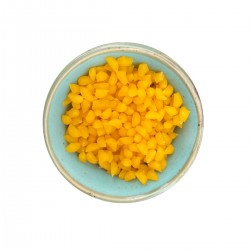
Beeswax is produced by the wax glands of worker bees and is used by bees to build honeycombs. Wax is obtained as a by-product of honey production. The fatty acids found in wax, such as triacontanol, octacosanol, hexacosanol and tetracosanol, have antioxidant and anti-inflammatory effects. The antiseptic effect of wax is given by three components: 10-hydroxy-trans-2-decenoic acid, chrysin and squalene (source).
Beeswax can be used in soap to make it stronger.
Adding beeswax to a finished soap mass does not add much. The soap has already gone through the saponification process and the wax itself will no longer saponify. The wax also does not want to mix well with the soap mass (especially if the temperature is not high enough) and can remain in the mass in lumps.
Beeswax can be used in small amounts in homemade soap, up to 20 g per 1 kg. Too much wax will make the soap less foamy, sticky, and will not glide on the skin as well. Adding wax will not change the color or smell of the soap much, as the amount is small.
Adding honey to soap makes it foam better.
When adding honey to your homemade soap, you don't need to factor it into your soapstone calculations, because honey doesn't saponify. So feel free to add it to your favorite soap recipe. If you want to add honey, leave some of the water for the soapstone solution to dissolve the honey (honey doesn't dissolve in oil). Mix the water-honey mixture with the fat mixture and the soapstone solution. The appropriate amount of honey is about 1 teaspoon per 300 g of fat.
When adding honey, the soap making temperature should be kept as low as possible. Similar to sugar, honey can overheat the soap mixture. However, the honey itself will turn brown inside the soap due to caramelization at high temperatures.
When pouring soaps containing honey into portion molds, there is less risk of the soap overheating, with the temperature rising the highest in a deep, closed mold.
To avoid overheating, it is better not to cover the soap mold and place it in the refrigerator or a cool room immediately after pouring the mold. The lower the temperature, the lighter the soap will be. If the soap overheats, the color of the soap will turn brown and, in extreme cases, cracks will appear on the surface of the soap. These are visual defects that do not prevent the soap from being used.
This photo shows a failed soap with honey and beeswax. Beeswax needs a higher temperature to prevent it from solidifying, and honey needs a lower temperature to prevent the soap from turning brown. There are yellow pieces of beeswax left in the soap and the soap itself has turned caramel brown.
If you are interested in using honey in soap, you can find more information in the articles below:
Soapqueen's article Adding Honey to Cold Process Soap: Tips, Tricks & Recipe goes into more detail about using honey in soap and shares tips for getting the best results.
Jan Berry of The Nerdy Farm Wife blog compares cold process and hot process soaps made with milk and honey in her article Milk and Honey Soap (Cold Process vs Hot Process) . Using the same recipe (you can also find the recipe in the article!) the result is soaps with completely different looks.
Milk and honey are also the main characters in Modern Soapmaking's herbal milk and honey soap recipe. As a bonus, the author also teaches you how to make your own oat and flaxseed milk for soap.
In cosmetics, beeswax acts as a product consistency enhancer and creates a protective barrier. Beeswax has modest skin moisturizing and softening properties, which is why it is used together with other components in various creams, ointments, and creams.
When used in cosmetics, beeswax hardens the product and creates a protective layer on the skin's surface. The protective layer formed on the skin's surface prevents moisture loss and also protects against external influences. This is important, for example, in contact dermatitis. Wax is an effective component in lip products, creating a protective layer on the lips from cold and wind. In foot care products, wax provides protection against moisture loss and thus helps to reduce, for example, cracked heels.
There are recipes online that use beeswax as an emulsifier that binds water and oil. Beeswax has water and oil binding (emulsifying) properties, but it can only emulsify a very small amount of water into the oil and the mixture can eventually become layered when left to stand. Therefore, beeswax cannot be used as the main emulsifier in creams containing a large amount of water, but as a co-emulsifier and thickener.
Historically, beeswax has been used in creams with borax. However, borax has been recognized as a substance with carcinogenic properties and the use of this ingredient is prohibited in the European Union. Beeswax can be used in creams, for example, with lanolin or lecithin or any other emulsifier.
Many cosmetic makers like to add honey to their cosmetics along with beeswax. Honey is a humectant, which attracts moisture and acts as a moisturizing component in cosmetics. It is important to note, however, that unlike wax, honey does not mix with fats. Therefore, it is difficult to use in recipes that do not contain water. At first, the honey mixes with the oils, but it remains in the product as small crystals and can eventually accumulate at the bottom of the cup. Honey is better used in cosmetics that contain water and/or emulsifiers, such as water-based creams.
To preserve the properties of honey in cosmetics, honey should be heated as little as possible. At a temperature of 70 degrees, only sugars remain in honey and its healing properties are reduced.
Propolis is a sticky substance produced by bees that is used to seal honeycombs. In cosmetics, propolis has antibacterial and antifungal properties. When using propolis, it must be dissolved in alcohol first, as propolis does not dissolve in water or oil.
Propolis already dissolved in alcohol can be purchased as a propolis tincture.
Research finds bee propolis is a beneficial additive in lipsticks
Bee Products in Dermatology and Skin Care
Petra Ahnert “Beeswax Alchemy”
Photo by PollyDot from Pixabay


Leave a comment